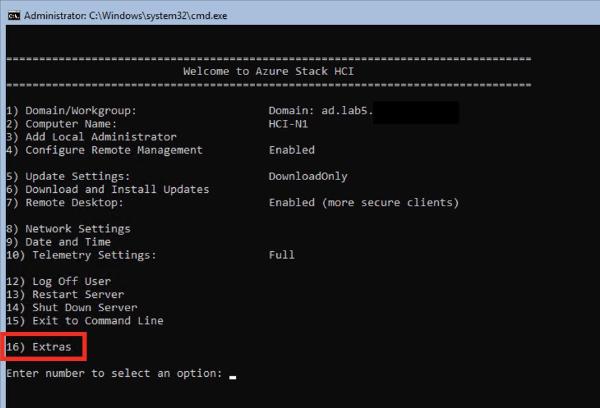
Azure Stack HCI 20H2 rebuilt SConfig in PowerShell! I’ve created xSConfig to extend it with cluster info, S2D status, storage pool details, and node health—all from the familiar SConfig interface.
Worried about how hard you’re pushing your S2D cache SSDs? This post covers identifying cache disks, querying storage history, using Cluster Performance History, and a new tool to check cache wear across your environment.
Patching S2D clusters is a common question. This first part covers offline patching—shutting everything down, patching all nodes simultaneously, and starting back up—with scripts like Stop-S2DCluster and Start-S2DCluster to automate the process.
Improper maintenance mode is a top cause of S2D failures. These three PowerShell functions—Get-S2DNodeMaintenanceState, Enable-S2DNodeMaintenance, and Disable-S2DNodeMaintenance—make it easy to do it right.
Ever wondered how much of your S2D Storage Pool is actually available? This PowerShell function shows total size, allocated space, Mirror/Parity available capacity, and reserved space—locally or across multiple clusters.
Cache stats matter! Learn how to monitor your S2D write cache allocation using Windows Server 2019’s Cluster Performance History or Windows Server 2016’s performance counters, plus a handy PowerShell function.
If you’re experiencing Event ID 5120, CSV timeouts, or VM pauses when patching S2D clusters, Microsoft has identified the cause. Here’s the workaround using Storage Maintenance Mode and ready-to-use CAU pre/post scripts.
WS2016Lab by Jaromir Kaspar lets you deploy an entire nested S2D lab on any Hyper-V host—even a Windows 10 laptop! Perfect for testing Windows Server 2019, S2D, Storage Replica, Project Honolulu, and many more scenarios.
The best information on S2D often comes from blog posts rather than documentation. Here’s my curated list of essential reads covering storage pools, SSD endurance, volume resiliency, and why you shouldn’t use consumer SSDs.
Discovered a bug where physical disks stay in maintenance mode after applying September CU to S2D clusters. This breaks CAU patching and causes capacity issues. Here’s how to recover and avoid the problem.